
Disclaimer
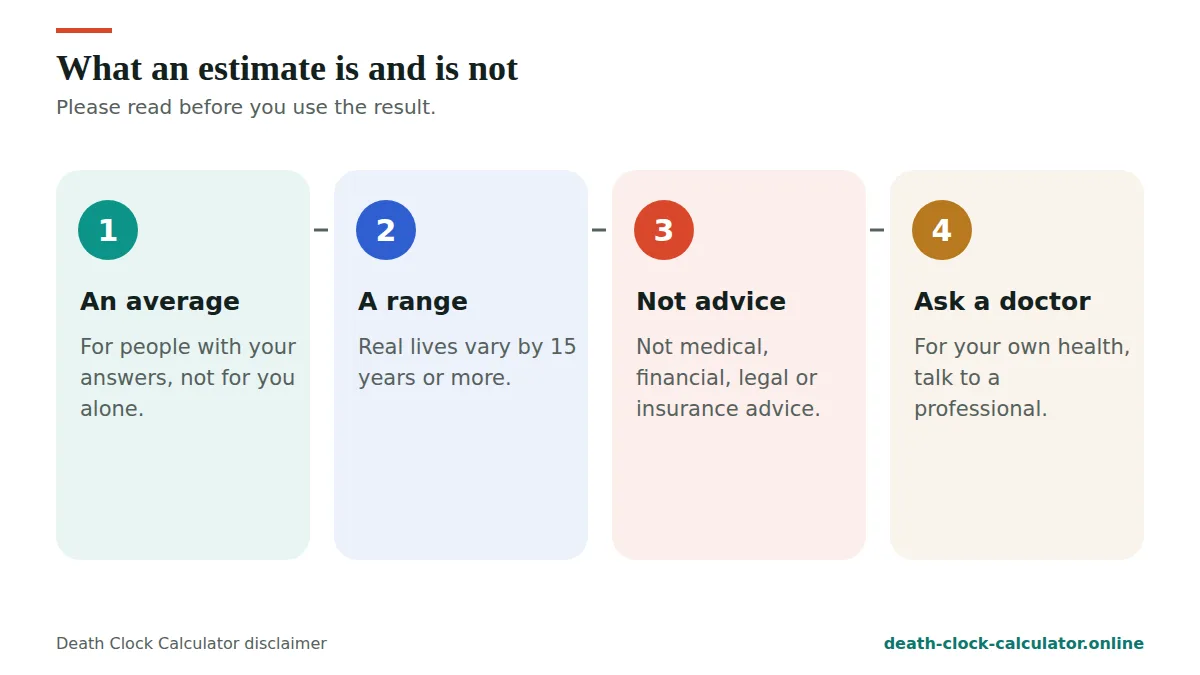
Death Clock Calculator gives educational estimates based on population data. It is not medical, financial, legal or insurance advice, and it is not a medical device. Your result is an average for people who share your answers, not a prediction about you.
- UN 2024 data, 201 countries
- Nothing stored or sent
- Free, no sign-up
On this page
Not medical advice
Nothing on this site diagnoses, treats or predicts any illness. The calculator can’t see your medical history, family history, test results or genes. If you have concerns about your health, talk to a doctor or other qualified health professional. Never delay seeking care because of something you read here.
Not financial or insurance advice
Don’t use these estimates to make decisions about life insurance, pensions, annuities, investments or retirement without a qualified adviser. Insurers and pension providers use their own detailed tables and medical information.
Accuracy
We work hard to keep every figure accurate and sourced, and we explain our method in full on how we calculate. Even so, all models simplify reality and public data can change. We make no promise that any estimate is correct for any person.
If the result upsets you
It’s normal to feel uneasy when you see a number like this. Remember that it describes an average, and that many people live far beyond it. If you feel low or distressed, please talk to someone.
What this disclaimer covers
This disclaimer applies to every page on Death Clock Calculator. That includes the death clock, the other calculators, the quiz, the guides, the country pages and the downloadable data. It also applies to any result you share with other people.
Why a death clock needs a disclaimer
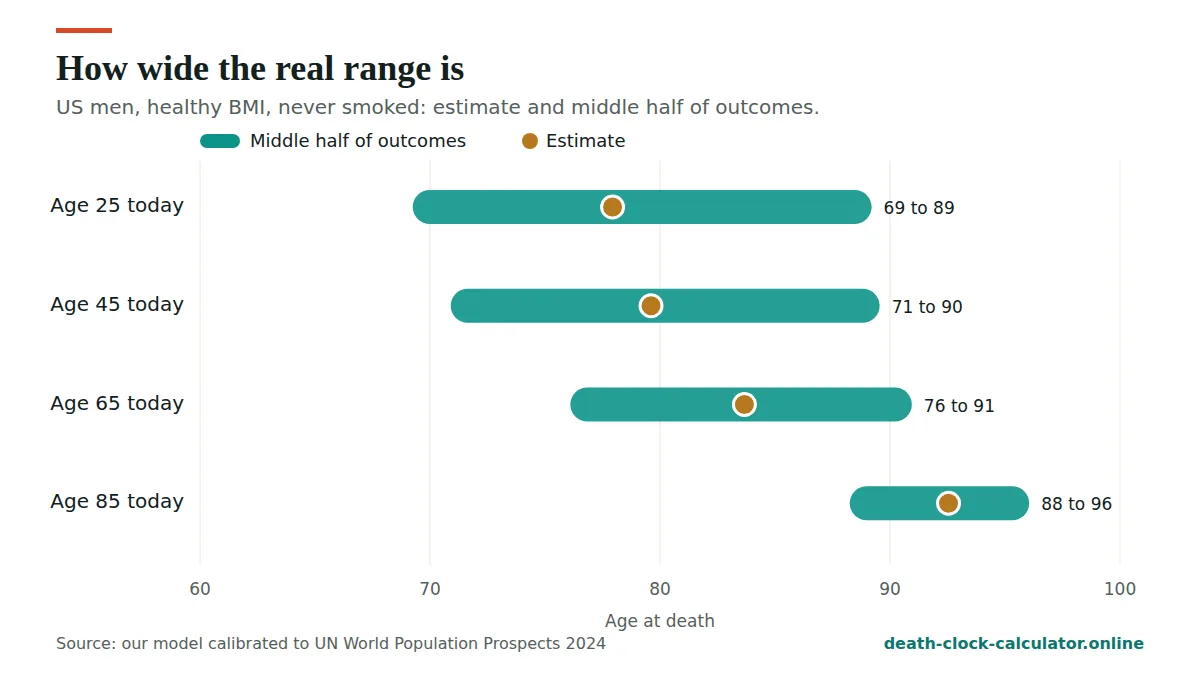
A single age or date can look very certain. It isn’t. The calculator works out an average for a large group of people who gave the same answers as you. Some of them will live much longer, and some shorter. That is the main reason this disclaimer exists.
The model uses public data from the UN World Population Prospects 2024 and published studies. It does not know about your genes, your family history, your medical tests or any illness you have.
What the estimates can and can’t tell you
The table below sums up the limits in plain terms. Read it before you rely on any number from the site.
| A result can | A result can’t |
|---|---|
| Show the average for people who share your answers | Predict when or how you will die |
| Show which habits move that average the most | Diagnose, treat or rule out any illness |
| Compare countries using the same UN data | Replace advice from a doctor or adviser |
| Help you start a conversation about health or planning | Price insurance or set a pension plan |
Links and outside sources
We link to primary sources such as the UN and the WHO Global Health Estimates so you can check our figures. Life expectancy comes from UN World Population Prospects 2024, and causes of death come from the WHO 2021 figures. We don’t control those sites, and this disclaimer can’t cover what they publish. If a source changes its figures, we update our pages during our regular reviews. How we do that is set out in our editorial policy.
Using the site sensibly
- Read your result as a range, not a fixed date.
- Check how the numbers are made on how we calculate.
- If you have health worries, see a doctor. Blood pressure, for example, can often be checked at a pharmacy.
- For money decisions, speak to a qualified adviser.
- Keep in mind that your answers stay in your browser, as our privacy policy explains.
Questions about this disclaimer
If anything in this disclaimer is unclear, or you think a page goes beyond it, write to us through the contact page. We would rather hear about a problem than leave it on the site.
Support if this topic weighs on you
Reading about death can stir up strong feelings, even when the numbers are only averages. Our death anxiety help page has simple ways to cope. If you want to talk to someone now, these free services can help.
If you are feeling low
If this topic is weighing on you, please talk to someone today. You do not need to be in crisis to call.
- United States: call or text 988 (988 Suicide and Crisis Lifeline)
- United Kingdom and Ireland: Samaritans, call 116 123 for free
- India: Tele-MANAS, call 14416 (free, 24 hours, government of India)
- Anywhere else: findahelpline.com lists free, confidential helplines by country
If you are in danger right now, call your local emergency number.