
Editorial Policy
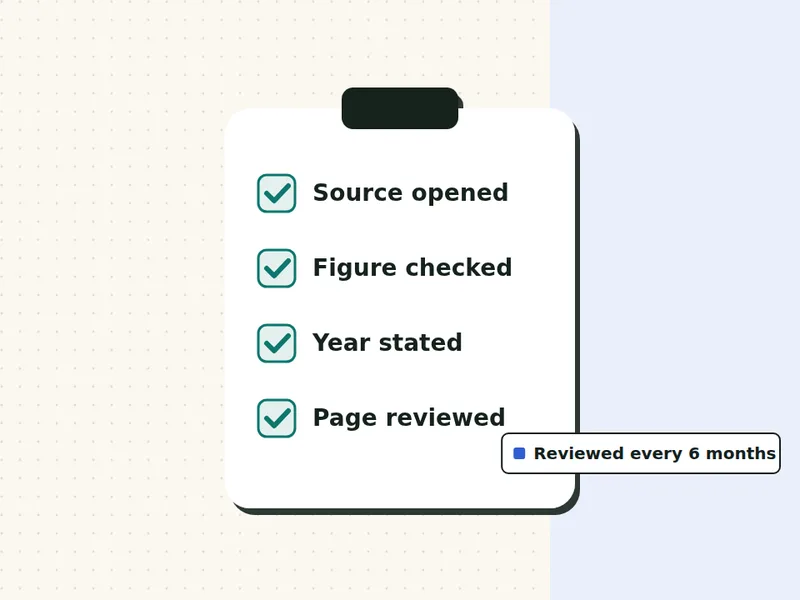
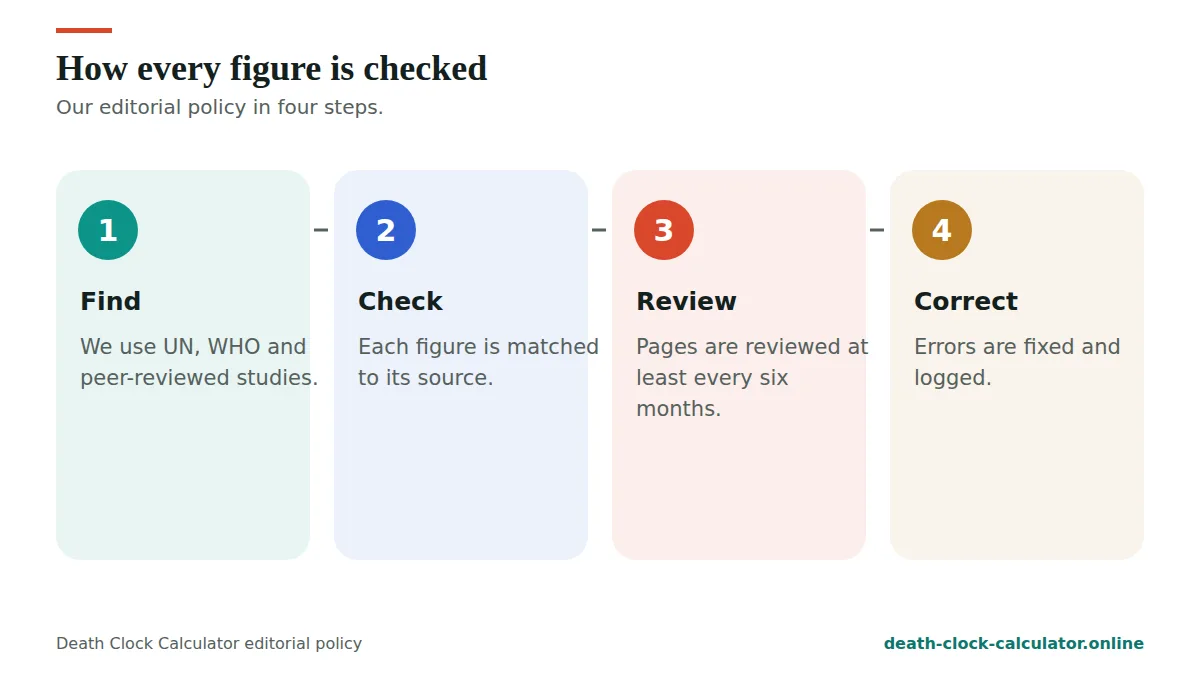
Every number on Death Clock Calculator comes from a named, public source that we have opened and checked. We review the site at least every six months and whenever the UN or WHO release new data. If we get something wrong, we fix it and log the change.
- UN 2024 data, 201 countries
- Nothing stored or sent
- Free, no sign-up
On this page
How we choose sources
- Life expectancy: United Nations World Population Prospects, one release and one year for every country.
- Causes of death: World Health Organization Global Health Estimates.
- Lifestyle effects: large, peer-reviewed studies and meta-analyses in major journals, preferring those with hundreds of thousands of people and long follow-up.
- We link to primary sources, not to news stories or other calculators.
- If we can’t verify a number in its source, we leave it out.
How we check content
- A writer drafts the page in plain English.
- Every figure is checked against the original source, and the source is listed on the page.
- Model outputs in tables are generated directly from the same code the calculator uses.
- Pages about health topics are written in a calm, factual tone. We avoid fear-based language and we never predict a cause of death for a person.
- Each page shows the month it was last reviewed.
How often we update
At least every six months, and within a month of any new UN World Population Prospects or WHO Global Health Estimates release. Changes to the model or data are recorded in the change log on how we calculate.
Corrections
If you spot an error, please tell us through our contact page. Include the page and what you think is wrong, with a source if you have one. We reply to every correction and fix confirmed errors as soon as we can.
Independence
We are funded by display ads only. Advertisers have no say in our content or results. We don’t accept paid content, sponsored studies or affiliate deals with health, insurance or supplement companies.
Use of AI tools
We may use software tools, including AI writing assistants, to help draft or edit text. A person reviews every page, and every figure is checked against its source. The calculator itself does not use AI.
Our editorial policy in brief
This editorial policy explains how we decide what goes on Death Clock Calculator, and what stays off. It applies to every calculator, guide, table and country page on the site. If a page breaks this editorial policy, we treat that as an error and fix it.
| Topic | Our rule |
|---|---|
| Life expectancy data | UN World Population Prospects 2024, one release and one year for every country |
| Cause of death data | WHO Global Health Estimates 2021 |
| Unverified numbers | Left out |
| Review cycle | At least every six months, and after new UN or WHO releases |
| Authorship | The Death Clock Calculator editorial team |
| Funding | Display ads only, with no say over content |
Why a health site needs a clear editorial policy
Life expectancy is a health topic. A wrong number can worry someone for no reason, or give false comfort. That is why we hold ourselves to a written editorial policy and publish it here.
The policy also helps you judge us. You can compare any page with the rules below. If the two don’t match, please tell us.
Primary sources we link to
We go to the original data, not to news stories about it. The two main sources are:
- The United Nations World Population Prospects, for life expectancy at birth and at age 65 in 201 countries and territories.
- The WHO Global Health Estimates, for the leading causes of death.
Lifestyle effects come from large, peer-reviewed studies. Each one is named on the page where it is used and listed on data and sources.
How we write about risk
Our editorial policy sets clear rules for tone. Every page follows them.
- Results are averages for groups of people, never predictions for one person.
- We show ranges, not just a single age or date.
- We never tell a reader how or when they will die.
- We use plain English and explain any technical term, often with a link to our life expectancy glossary.
- We avoid fear, hype and shock headlines.
- When a page may cause worry, we point to our death anxiety help page.
What our editorial policy does not allow
- Numbers we could not find in the original source.
- Claims that a habit, product or test will add a set number of years to one person’s life.
- Paid content, sponsored studies or affiliate deals with health, insurance or supplement companies.
- Links to other death clock calculators as sources.
- Medical advice or diagnosis. For your own health, talk to a doctor.
Model outputs and tables
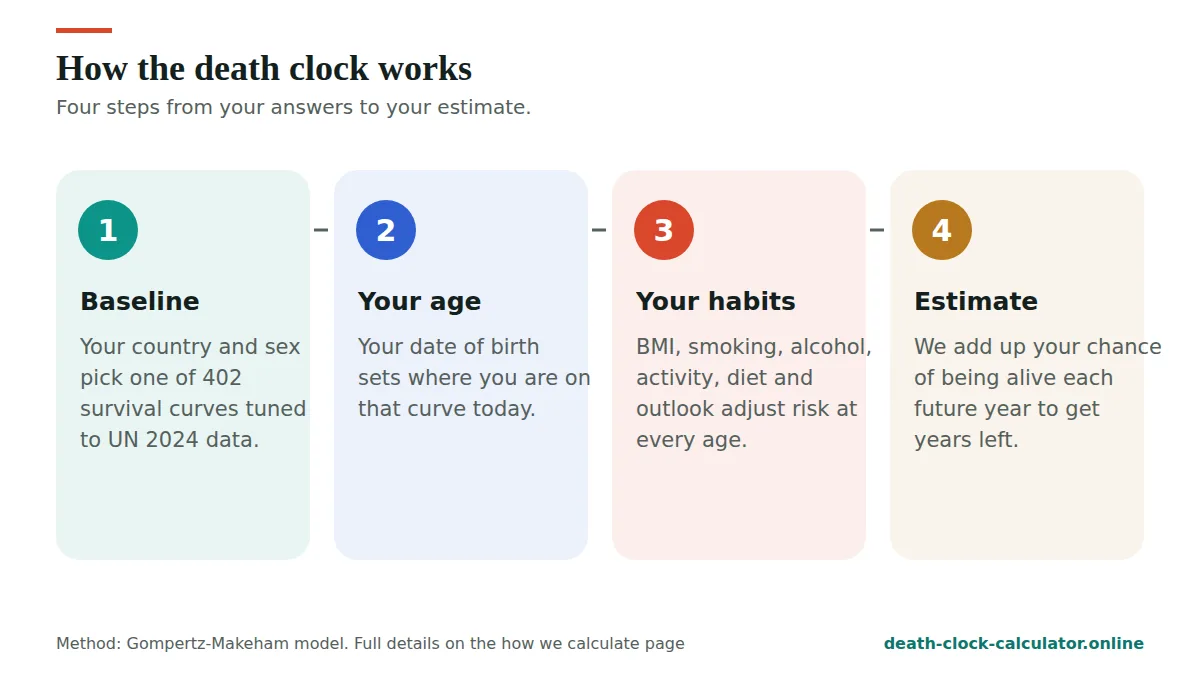
Some pages show estimates from our own model, such as the expected age at death for a healthy 40-year-old. These tables are made by the same code the calculator uses, so a page and the calculator always agree. We label them as estimates for people with a healthy BMI who have never smoked. The method is on how we calculate.
Who applies the editorial policy
The Death Clock Calculator editorial team writes, checks and reviews every page. We don’t publish personal bylines. Each page shows who it is by and when it was last reviewed, so you can see how current it is.
How to report a problem under this editorial policy
If a page seems to break our editorial policy, email hello@death-clock-calculator.online or use the contact page. It helps if you include:
- The page address.
- The sentence or figure you think is wrong.
- A link to a source, if you have one.
We check the claim against the original source. If we were wrong, we fix the page. Changes to the model or data are recorded in the change log on how we calculate. You can read more about who we are on our about page.
See your own estimate in 30 seconds
Free, private and based on UN 2024 data for 201 countries. Nothing you enter is stored.
Open the death clock →